
Doli Guides · From findings to action
What does a fire door inspection include?
And what should the report actually tell you?
The visit is booked. You know someone will check the doors. But what happens next — and will the report leave you with a clear plan or another list of questions? Here’s what to look for before, during and after the inspection.
By Doli Contracts · 7 min read · Guidance for England
The short answer
A fire door inspection usually covers the door leaf, frame, gaps, seals, glazing, hardware and operation, within an agreed scope. A useful report connects each finding to an identifiable door, explains any limitations and sets out the recommended next steps.
First, establish what you are booking. A routine visual check and a detailed survey answer different questions. Neither the length of the report nor a reassuring green tick can tell you what was actually examined.
In this guide
Start with the scope, not the appointment time
For blocks of flats in England, government guidance distinguishes simple Regulation 10 checks from assessing whether doors are suitable. Appropriately instructed staff can carry out the routine checks; specialist assessment is a different task. The building’s fire risk assessment should already have considered door suitability.
When commissioning a detailed inspection, agree which doors are included, whether every door or a sample will be inspected, and whether the work is visual only or includes agreed opening-up. Ask what records the inspector needs. “All doors checked” is only helpful if everyone means the same doors.
For the separate question of checking intervals, see our guide to how often fire doors should be checked.
What does a fire door inspection include on site?
The government’s routine fire-door checklist covers the main visible components and operation. A detailed survey can investigate findings further within its agreed scope. Typical areas to discuss include:
The leaf, frame and surrounding construction
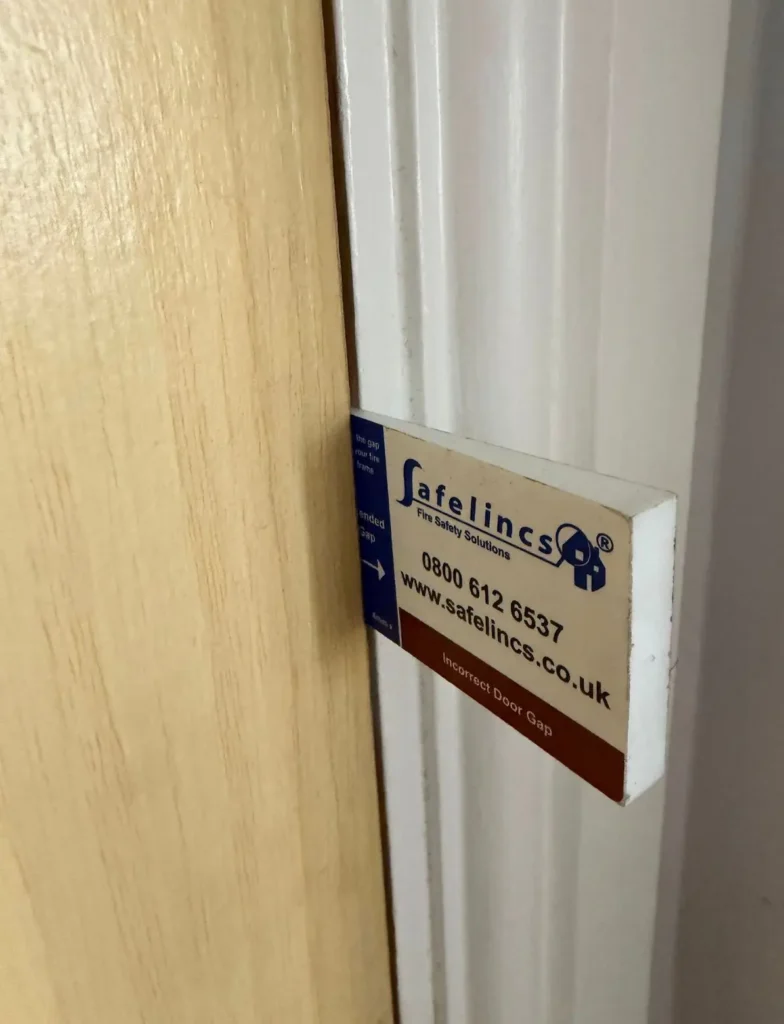
Visible damage, distortion, alterations and the condition of the frame and securing wall. Relevant gaps can be measured and recorded against the applicable requirements. The report should explain the basis used, rather than leaving you to interpret an unexplained number.
Seals, glazing and hardware
The condition and arrangement of seals, glazing, hinges, locks, latches and other fittings, including letterboxes or ventilation grilles where present. Identification labels, available product information and relevant signage also help build the picture of the particular door.
How the door operates
Whether the door moves freely and whether an applicable self-closing device brings it fully closed, engaging any latch. Obstructions, wedging and visible alterations matter too. A door that closes successfully has passed an operating check; that alone does not prove the whole assembly’s fire resistance.
Seven things a useful fire door inspection report should explain
A good report should help the next person find the door, understand the concern and arrange the right response. Ask for these details when agreeing the reporting format:
- Which door is it? A consistent reference, location and door type. “Door 14, second-floor stair lobby” is easier to act on than “upper-floor door”.
- Who inspected it, and when? The inspection date, inspector’s identity and the scope of their assessment. Someone reviewing the record later needs to know what visit it describes.
- What was examined? The components and operation checked, with relevant readings, observations and references. Ask how the assessment criteria were selected for these doors.
- What exactly was found? A clear description of each concern, with photographs where useful. “Closer issue” needs more explanation before anyone can plan suitable work.
- What could not be established? Inaccessible doors, concealed details, missing information and the effect of those limitations. “Not inspected” must remain distinguishable from a satisfactory finding.
- What happens next? Recommendations for maintenance, further investigation or replacement, with priorities explained. Clarify proposed timescales and any issue requiring immediate escalation.
- How will it be followed up? A door schedule or action list that can carry an owner, due date and completion evidence. Agree who will track those actions after the report is issued.
Even the government’s simple checklist includes an action plan. The document is there to support the work that follows, not just to confirm that a visit happened.
What if the report says “failed” or “further investigation”?
Read the finding behind the label. A colour or pass/fail result needs an explanation: what was observed, why it matters and what is recommended. If the wording is unclear, ask the inspector to clarify it before turning the report into a work order.
A defect does not automatically mean a new doorset
Some findings may lead to suitable maintenance; others may need further assessment or replacement. Our guide to fire door repair or replacement explains that decision. A recommendation should relate to the actual door and available evidence.
An honest limitation is useful information
A visual inspection cannot see every concealed detail. The FDIS inspector assessment requirements expect submitted reports to identify missing client information and explain its impact. That is a useful principle when reviewing your own report: uncertainty should be visible, with a clear next step.
For example, “frame-to-wall detail concealed; not verified within this visual inspection” leaves a specific question to resolve. It should not quietly become “frame satisfactory” when someone copies the findings into a spreadsheet.
How can you help the inspection go smoothly?
Share the door list, plans, relevant fire risk assessment, previous reports and product or installation records you already hold. Say what is missing. Sending a folder labelled “final-final-v3” is understandable; telling the inspector which document is current is much more helpful.
Arrange access to both sides of the doors in scope, including resident appointments and keys for locked areas. Confirm safe access arrangements and any permissions needed for opening-up. A planned visit is easier to complete when the inspector knows about access restrictions beforehand.
Doli’s fire door surveys bring door references, visible condition, photographs and recommended actions into a usable record. Agree the scope and reporting requirements at the outset, especially across several buildings.
Give the findings somewhere to go
Review the report, assign actions and keep unresolved items visible. Ask for urgent concerns to be raised promptly rather than waiting for the final document. After work, retain completion details against the original door reference and arrange any necessary verification.
The BWF Fire Door Alliance links inspection with ongoing maintenance. An inspection identifies concerns; it does not repair them. Where suitable remedial work is needed, discuss the findings with our fire door maintenance team.
Frequently asked questions
Is a fire door inspection the same as a fire risk assessment?
No. The inspection examines doors within its scope; the building’s fire risk assessment considers wider fire risks and precautions. Findings from one can inform the other. Booking a door survey does not replace the need for an appropriate fire risk assessment.
Does a report certify every door’s fire resistance?
Not automatically. Ask exactly what any conclusion or certificate covers. Observations of visible condition cannot always establish concealed construction or the performance of an unknown assembly. Supporting evidence and further investigation may be needed.
What happens if a door cannot be accessed?
It should be identified as uninspected or partially inspected, with the reason and remaining scope recorded. Arrange follow-up access where needed. An unanswered door is not a completed inspection.
Must an older flat entrance door be replaced if its label is missing?
Not on that fact alone. Government guidance for existing blocks of flats says absent certification does not itself establish that a door is unfit. Its adequacy needs to be considered in context through the fire risk assessment.
Let’s get it sorted
Clear findings. A practical next step.
Doli Contracts works with landlords, managing agents and property teams across London and the South East. Managing a building in Bromley? Explore our local fire door services.
Tell us the property’s location, the doors you need assessed and what you want the report to help you decide. Already have a report? Send the relevant findings. You do not need to translate the technical language before getting in touch.
This guide covers general considerations in England. The appropriate action depends on the individual door, its evidence and the building’s fire-safety arrangements.