
Doli Guides · Getting the details right
A new fire door in an existing frame?
Five checks before you order.
The door has been flagged for replacement. The frame still looks tidy. Surely that part can stay? Sometimes it can — but fitting a new fire door in an existing frame needs more than a matching width and height.
By Doli Contracts · 7 min read · Guidance for England
The short answer
Yes, in some cases. The retained frame must be suitable for the new door, in acceptable condition and correctly installed. The proposed combination needs supporting evidence; a door that happens to fit the opening is not enough.
The BWF Fire Door Alliance’s frame guidance explains why compatibility with the particular door leaf matters. Have that assessed before ordering, rather than discovering a problem when the new door arrives.
In this guide
Can you fit a fire door in an existing frame?
There is no useful blanket answer without looking at the door and its setting. A sound, compatible frame may be suitable to retain. Another may look equally presentable while leaving questions that a fresh coat of paint cannot answer.
The door leaf is the moving panel. Its frame, seals, hinges, other hardware and any glazing work with it as an assembly. A doorset is supplied as a complete unit from one source. The BWF explains these distinctions; buying a rated leaf does not establish the performance of everything around it.
That is why “replace the door” is an incomplete brief. Does it mean the leaf alone, selected components or the whole doorset? Get that clear at the start. If you are still deciding whether replacement is necessary, our guide to fire door repair or replacement is the place to begin.
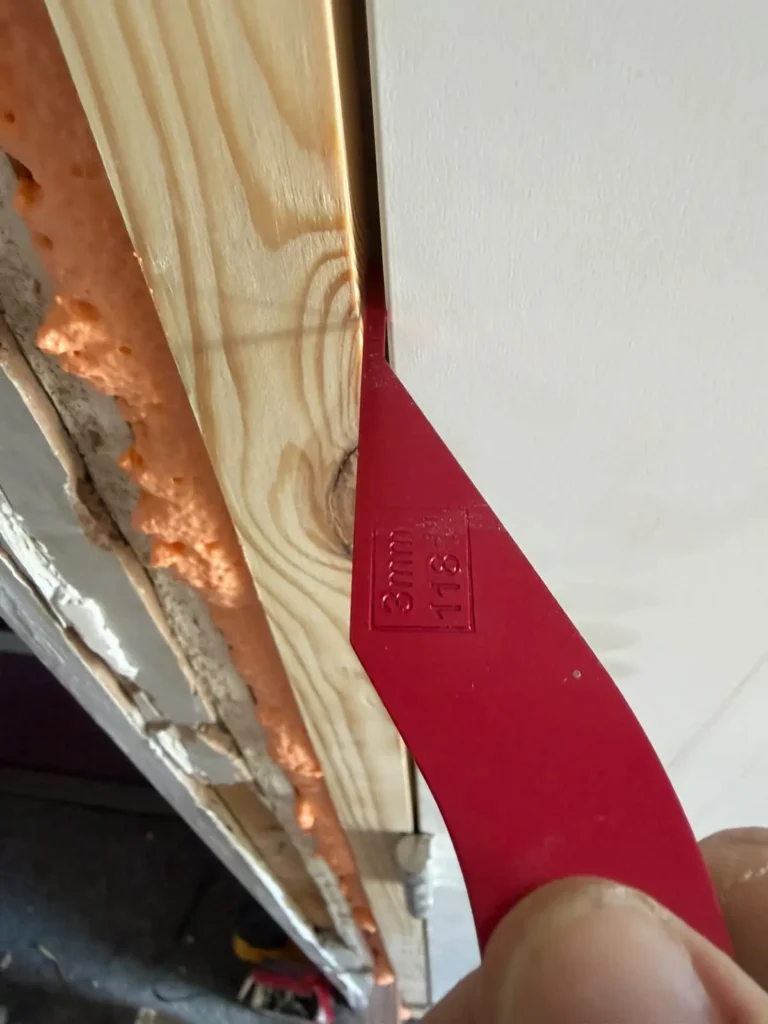
Five checks before keeping the existing frame
These are questions to put to a competent surveyor or installer. You do not need to turn up with a timber specification in your pocket.
- What does this particular door need to achieve? Start with its location, the building’s fire-safety arrangements and the required fire and smoke performance. “We normally fit this one” needs a reason behind it.
- Does the frame match the new leaf’s evidence? Its material, dimensions, profile and stop must fall within the permitted specification. Ask which manufacturer’s instructions and supporting evidence cover the proposed combination. The BWF frame guidance sets out why this matters.
- What has happened to the frame over the years? Damage, distortion and old hardware cut-outs need assessment. A tidy finish does not reveal every alteration. JB Kind’s frame fact sheet highlights checks on previous ironmongery recesses and the installation behind the architrave.
- What connects the frame to the wall? The surrounding construction, fixings and appropriate fire-stopping need consideration. Some details may be concealed. Agree any investigation with the contractor, including access and making good, rather than assuming the trim tells the whole story.
- Will the finished assembly follow the chosen specification? Seals, hinges, locks, closers and other fittings must be appropriate for it. Keeping the frame does not automatically mean keeping every old component. JB Kind’s fitting guidance explains the importance of compatible seals and ironmongery.
A useful answer identifies the evidence, the work needed and any remaining uncertainty. “It should be fine” is a conversation starter, not a finished specification.
What if nobody can verify the frame?
Pause the purchase and ask what would resolve the uncertainty. More investigation or manufacturer advice may help. If a suitable arrangement cannot be supported, the replacement plan needs to change; a new frame or complete doorset may be the appropriate route.
Agree the answer before the programme is built around a leaf-only replacement. It is much easier to explain the scope to residents when everyone knows what is being changed and why.
An older door without paperwork is a different question
Missing certification does not, by itself, mean an existing flat entrance door must be replaced. Government guidance for England explains that existing doors should be considered through the building’s fire risk assessment. Deciding whether an existing door can remain is different from demonstrating that a newly selected leaf is compatible with a retained frame.
A complete doorset still needs correct installation
A coordinated product does not remove the need to fit it properly. JELD-WEN’s installation advice stresses skilled installation and following the instructions for the particular fire-door certification. Ask who will install it, which instructions apply and how the finished work will be checked.
What should you send your installer?
A few useful details beat a long email saying “the frame looks OK”. Start with:
- The door’s location and reference: for example, “Flat 12 entrance door”, rather than “the white one”.
- The reason for the proposed work: attach the relevant survey finding or report extract.
- Existing records: manufacturer details, labels, previous installation information and repair history, where available.
- Clear photographs: both sides, the frame and visible defects. Photographs help plan a visit; they cannot establish everything on their own.
- Access arrangements: who can arrange entry, what needs protecting and any constraints on the visit.
If the findings leave the scope unclear, a fire door survey can help identify what needs investigating. For the resulting work, discuss the proposed assembly and installation details with our fire door installation team.
Ask for a handover that makes sense six months later
Request a clear record of what was replaced, what was retained, the product information and the checks completed. Link it to the same door reference used in the original report. Record any unresolved points explicitly.
That way, the next person looking after the building does not have to reconstruct the job from an invoice and a photograph. Add the finished door to the ongoing checking programme; our guide to how often fire doors should be checked explains the routine arrangements for blocks of flats.
Frequently asked questions
Can an FD30 door go into an ordinary timber frame?
The label “timber frame” is not enough to decide. The frame and installation need to suit the specific door’s evidence and the required performance. Have the proposed combination assessed before buying the leaf.
Does adding seals make the existing frame suitable?
Seals are one component of the assembly. Adding them does not establish that the frame, hardware or installation meet the specification. The correct seals and their permitted position must follow the evidence for the chosen door.
Can I keep the architrave?
Possibly, but agree this as part of the work. The contractor may need access behind it to assess or complete the installation. Discuss removal, reinstatement and decoration before the visit, so the finishing work is not a surprise.
Can I arrange a new flat entrance door myself?
Speak to the building’s responsible person or managing agent before ordering. Government guidance says residents should not alter or replace their flat entrance door without the responsible person’s knowledge and agreement. Coordinate the specification, permissions and access arrangements first.
Let’s get it sorted
New door. Existing frame. Clear next steps.
Doli Contracts helps landlords, managing agents and commercial property teams across London and the South East plan fire door surveys and installations. Looking after a property in Orpington? See our local fire door services.
Send us the report, the door’s location and the records you already have. We can discuss what needs checking before you commit to a replacement. You bring the questions; we’ll help you work through them.
This guide covers general considerations in England. The appropriate action depends on the individual door, its evidence and the building’s fire-safety arrangements.