
Doli Guides · Fire door maintenance
Why won’t my fire door close properly?
Common causes and what to do
It gets almost to the frame, then stops. Or it closes with a bang and still doesn’t latch. A fire door that needs a helping hand deserves attention. Here’s what those clues can mean and how to get the right help.
By Doli Contracts · 6 min read · Guidance for England
The short answer
A fire door not closing properly may have an obstruction, worn hinges, misaligned hardware, damaged seals or a problem with its closer. Several faults can look alike, so the symptom alone won’t tell you which repair is needed. A self-closing fire door should return fully into its frame and engage any latch that forms part of its design, without that familiar last push.
If you spot a closing fault, report it promptly to the person responsible for the building. Don’t wedge the door open or disconnect its closer to make day-to-day access easier.
In this guide
Fire door not closing properly? 6 common causes
You don’t need to diagnose the fault yourself. Simply noting whether the door scrapes at the floor, stops just before the frame or fails to latch gives the maintenance team a better starting point. These six causes explain what may be happening; they aren’t a diagnosis of your door.
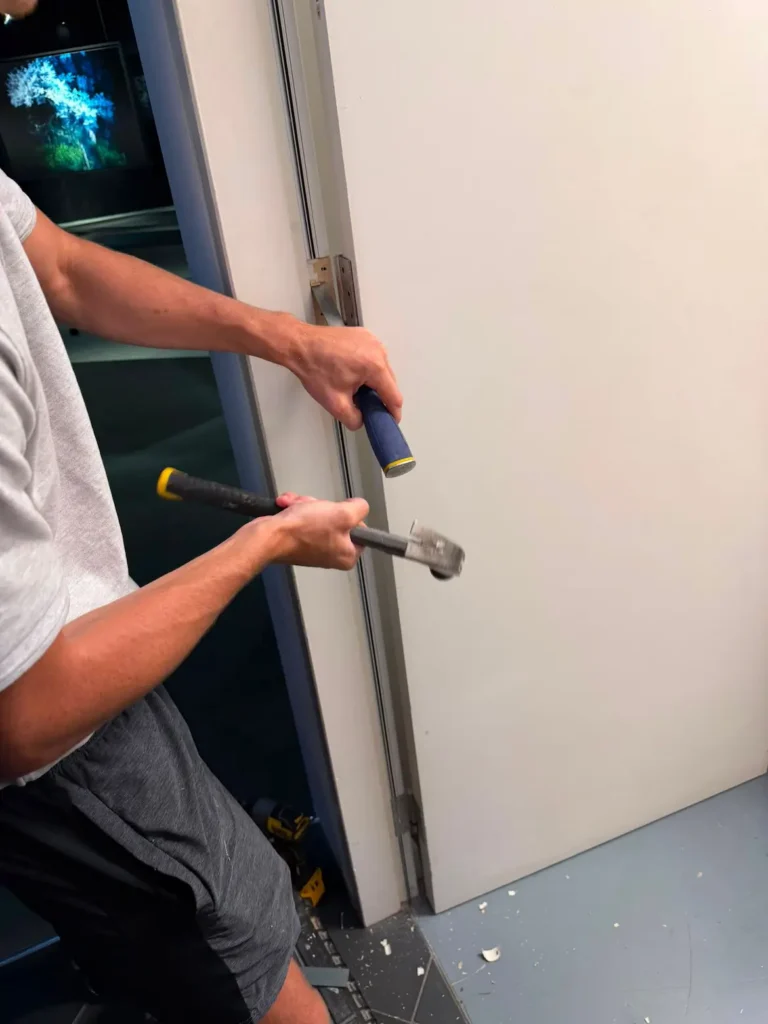
1. Something is getting in the way
Start with what’s around the door. A loose mat, debris or a nearby object may be blocking its path. If the problem appeared just after new flooring went down, mention that when you report it: a change in floor height can affect clearance. Don’t trim the bottom of a fire door without a competent assessment of what is suitable.
2. The hinges or door alignment have changed
When a door starts rubbing against its frame, it’s easy to blame the closer. Hinges and alignment deserve a look too. Loose or damaged hinges and fixings, or a door that has dropped, can affect alignment and leave uneven gaps. Adding more closing force may mask the resistance without putting it right. Dormakaba’s maintenance guidance highlights free movement, hinge condition and alignment as checks within the complete door system.
3. The closer isn’t doing its job
The closer does the work you’d otherwise do by hand. A loose mounting, disconnected arm or incorrect setting can change how the door shuts, and the device needs to suit the door and the rest of the assembly. A door that slams may also have a hydraulic fault: Allegion identifies oil loss and internal damage among possible causes. Any adjustment or replacement should follow the particular manufacturer’s instructions, taking both fire performance and ease of use into account.
4. The latch is missing its mark
This is the frustrating one: the door reaches the frame, but bounces back or needs a final shove. The latch and its receiving plate, known as the keep, may need attention. So may the alignment of the door itself. A stronger closer won’t automatically solve a mismatch between these parts; they need to work together.
5. A seal is catching or doesn’t suit the door
Seals are easy to overlook until one starts catching. A displaced seal or an unsuitable replacement can create resistance as the door closes. Don’t pull it out to free up the door. It needs to be assessed as part of the assembly. The BWF Fire Door Alliance’s hardware guidance explains why the correct components must be fitted and maintained together.
6. Something changed during other work
Think back to when the problem started. A new lock, recent decorating or damage to the frame may help explain the timing. A distorted door leaf or another alteration can also change how the door moves. Tell the person investigating about any work done before the fault appeared, and share photographs, product details or installation records if you have them.
What to do when you notice a fault
You don’t need to name a faulty component before raising the issue. If you’re a resident, tell your landlord, managing agent or building team. At work, use the building’s fire-safety or maintenance reporting process. Government guidance for blocks of flats says residents should report faults immediately and that necessary repairs or replacement should be arranged by a competent contractor as soon as reasonably practicable.
- Be specific about the door. “The third-floor landing beside the lift” gives the team a clear location to work with. Include the building address and any door reference number.
- Describe what it does. “It stops a few centimetres before the frame” is more useful than “it’s broken”. Mention any scraping, slamming or failure to latch, and when you first noticed it.
- Show it, if safe. A photograph or short video can help explain the behaviour. Mention recent flooring, decorating or lock changes too.
- Keep the route clear. Remove a loose obstruction only if it is safe to do so. Don’t dismantle, force or alter the door.
- Ask what happens next. The building’s responsible person should decide what action and interim arrangements are needed for the premises, and arrange follow-up.
“We just give it a push” can become a routine. It still leaves a faulty self-closing door relying on whoever happens to pass through it. Don’t accept that extra push as the solution. The London Fire Brigade’s fire-door advice also warns against wedging doors open or tampering with their components.
What should a professional assessment cover?
A useful assessment looks at the whole assembly: the door leaf, frame, hinges, seals, latch or lock, floor clearance and closer. It may also involve checking product evidence, earlier repairs and the surrounding installation. That gives the contractor a clearer basis for recommending work.
You should come away understanding what was found, what work is proposed and what still needs investigating. Ask for that in writing. After repairs, the contractor should check how the door operates and record the work. The BWF’s inspection and maintenance guidance explains how inspections identify defects that need attention.
When issues keep cropping up across a building, a structured fire door survey helps turn scattered reports into a door-by-door record. Your property team can then see what needs attention and which actions are still outstanding.
Does the door need repairing or replacing?
A closing fault doesn’t automatically mean starting again with a new door. Suitable maintenance may resolve worn hardware or an operating problem. The decision needs to reflect the door’s condition, construction and supporting evidence.
With Doli’s fire door maintenance service, the starting point is the existing door and the fault you’re seeing. Suitable work may involve hinges, closers, seals or other components. If the assembly cannot be suitably repaired, further investigation or fire door replacement may be recommended. Ask what has led to that recommendation and exactly what the work will cover.
Frequently asked questions
Is it enough that the door closes when I push it?
If the door is required to self-close, needing your final push is a fault to report. It should reach the frame and engage any required latch without that extra help.
Can I adjust the fire door closer myself?
For residents, leave the closer alone and report the fault. Maintenance staff need appropriate competence and the instructions for that particular device. A generic online adjustment guide can’t tell you whether a change is suitable for the complete doorset.
Why does the door slam but still fail to latch?
A loud close doesn’t tell you whether the latch has engaged. The closer may have a speed-setting issue or a fault, while misalignment or resistance may be preventing the latch from catching. The whole movement needs checking.
Can I wait until the next scheduled inspection?
Raise it now. A scheduled inspection is useful, but it isn’t a reason to leave a known closing fault unassessed. Reporting it gives the building team the chance to decide what needs to happen next.
Let’s get it sorted
Need help with a door that will not close?
Doli Contracts works with landlords, managing agents and commercial property teams across London and the South East. If your property is in Bromley, you can find out more about our local fire door services.
You don’t need to arrive with a diagnosis. Send us the door’s location, a short description of the problem and any survey findings you already have. We’ll help you work out the appropriate assessment and next steps.
This guide explains common symptoms. The appropriate action depends on the individual door and the building’s fire-safety arrangements.